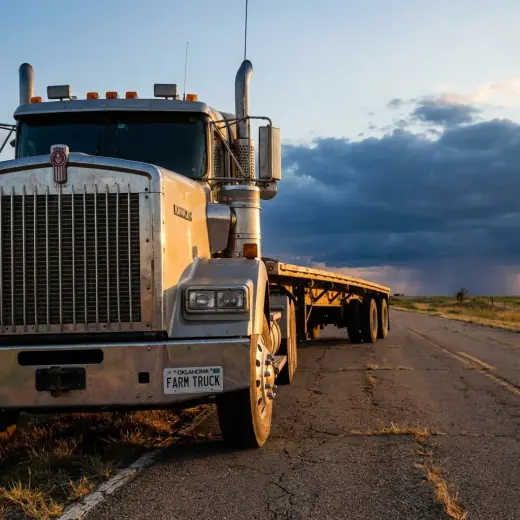
Catastrophic Trucking Litigation

Fatigued Truckers Kill.

Reviewed by Jason Hicks on May 10, 2026|Last Updated: May 10, 2026

Federal hours-of-service regulations exist because drowsy driving is as dangerous as drunk driving. When trucking companies push drivers beyond legal limits, catastrophic crashes follow.

What to decide first

Confirm whether this page matches what happened, what evidence matters now, and whether attorney review should start.

Case focus

Catastrophic Trucking Litigation

Federal hours-of-service regulations exist because drowsy driving is as dangerous as drunk driving. When trucking companies push drivers beyond legal limits, catastrophic crashes follow.

Proof track

Hours-of-Service Violation: Driver exceeded the 11-hour driving limit or 14-hour on-duty window.

Electronic logging device was disconnected, altered, or set to "unassigned driving" mode.

Next step

Free Truck Crash Review

Use the free case review form or call (405) 759-0515 for direct attorney intake.

01

Federal Hours-of-Service Rules

The Federal Motor Carrier Safety Administration (FMCSA) sets strict hours-of-service (HOS) limits for commercial truck drivers:

  • 11-Hour Driving Limit: A driver may drive a maximum of 11 hours after 10 consecutive hours off duty.
  • 14-Hour On-Duty Window: A driver may not drive beyond the 14th consecutive hour after coming on duty, following 10 consecutive hours off duty.
  • 30-Minute Rest Break: A 30-minute break is required after 8 cumulative hours of driving.
  • 60/70-Hour Limit: A driver may not drive after 60/70 hours on duty in 7/8 consecutive days.

These rules exist because the National Transportation Safety Board has identified fatigue as a leading factor in fatal truck crashes.

02

How We Prove Fatigue

  • ELD Data: Electronic logging devices record driving time, on-duty time, and rest periods. We obtain and analyze this data to identify HOS violations.
  • Dispatch Records: Communications showing the carrier pressured the driver to deliver on an unrealistic schedule.
  • Trip Planning Analysis: We reconstruct the driver's route and schedule to show that the delivery was impossible to complete within legal HOS limits.
  • Toxicology: Stimulant use (caffeine pills, amphetamines, energy drinks) can indicate a driver was fighting fatigue.
  • Crash Reconstruction: Absence of pre-crash braking or evasive action consistent with a driver who fell asleep or had a delayed reaction.
⚠️ Time-CriticalELD data and dispatch records can be altered or overwritten. Preservation demands must be sent to the carrier immediately.

Evidence and Next Steps

Use these resources to move from general information to the records, proof, and intake path that fit the matter.

Next step

Request Free Review

Move this truck driver fatigue matter into attorney review before records or leverage shift further.

Open Request Free Review

Next step

Case Results

Compare documented outcomes that show how similar proof translated into value.

Open Case Results

Next step

Hicks Legal Journal

Use supporting analysis and client-facing reference material to understand the next evidence and timing issues.

Open Hicks Legal Journal

Next step

Client Guides

Use supporting analysis and client-facing reference material to understand the next evidence and timing issues.

Open Client Guides

Next step

Resource Library

Use supporting analysis and client-facing reference material to understand the next evidence and timing issues.

Open Resource Library

Next step

Attorney Profile

Review trial counsel background and the firm posture behind this practice area.

Open Attorney Profile

Next step

Trust Center

Check the firm standards, review process, and proof posture before deciding.

Open Trust Center

Next step

Personal Injury Overview

Open the next resource that best matches this truck driver fatigue case.

Open Personal Injury Overview

Common Questions

How do you prove a truck driver was fatigued?

We obtain the driver's electronic logging device (ELD) data, dispatch records, trip plans, and delivery schedules. By reconstructing the driver's work schedule, we can show whether they exceeded federal hours-of-service limits or drove during high-risk fatigue windows.

Serious Case Criteria for Truck Driver Fatigue

We focus on high-impact claims where evidence, legal strategy, and trial preparation materially change outcomes.

This section is designed for families comparing firms based on litigation depth, not marketing volume. Use it to evaluate whether your claim has the severity, proof path, and timeline urgency required for a serious trial strategy.

Do You Meet Serious-Case Criteria?

We qualify cases by objective factors that drive recoverable value and courtroom credibility.

  • - Crash involved an 18-wheeler, box truck, fleet van, or work vehicle.
  • - Injuries required ER care, surgery, admission, or ongoing treatment.
  • - There is a question about black-box data, driver fatigue, or company safety failures.

Evidence and Investigation Priorities

We map immediate records that can be lost through short retention windows or delayed disclosure.

  • - ECM/black-box download, ELD logs, and dispatch communication.
  • - Driver qualification file, maintenance history, and cargo chain records.
  • - Rapid preservation requests for camera footage and post-crash inspection data.

Damages and Value Drivers

We value claims from records and long-term impact models, not quick-adjuster formulas.

  • - Severity of injuries and projected future medical care.
  • - Lost earning capacity and long-term work restrictions.
  • - Corporate safety violations that increase settlement leverage.

Defense Tactics and Rebuttal Focus

Anticipating defense themes early protects settlement leverage and trial positioning.

  • - Blame-shifting to weather, road design, or third-party traffic behavior.
  • - Early low-value offers before medical prognosis and vocational loss are known.
  • - Record-control tactics where carriers release partial logs without full context.

Evidence Preservation Window and Timeline

High-value litigation depends on preserving digital, medical, and witness evidence early. We start with urgent preservation notices, then sequence liability and damages proof before defense narratives harden.

Delays can permanently reduce case value. A structured timeline allows us to prove what happened, who knew what, and when each party failed to act. That chronology becomes the foundation for both settlement pressure and trial testimony.

What Happens Next

  1. Immediate conflict check and case review call.
  2. Evidence preservation and expert reconstruction planning.
  3. Demand package, negotiation, and trial filing if undervalued.

Damages Documentation Checklist

Serious-value recovery depends on record quality. Keep a disciplined file of provider notes, specialist recommendations, work restrictions, wage-loss records, and day-to-day functional impacts. This record set is often decisive when insurers challenge severity or duration.

We align each damages category with admissible proof so valuation reflects true long-term consequences, not a short-term snapshot created before treatment stabilization.

Liability Framework and Proof

We align every allegation with objective records, timeline evidence, and expert testimony. The goal is not volume; it is trial-grade proof that survives aggressive defense motions.

Local Venue and Process Context

Oklahoma venue selection, filing sequence, and early motion practice can materially change leverage. We build each case for the forum that best supports full-value recovery.

Common Questions

These questions reflect the most common decision points in high-stakes injury and civil-rights case review.

How quickly should I call after a trucking accident?

Immediately. Electronic data and camera footage can be overwritten on short retention cycles.

What if the trucking company denies fault?

We build liability from objective records, not statements. Logs, telematics, and maintenance data usually decide disputed fault.

Can more than one defendant be responsible?

Yes. Driver, carrier, broker, loader, and maintenance vendors may each share liability based on their role.

Do I pay anything up front?

No. We handle catastrophic trucking cases on contingency. No fee unless we win.